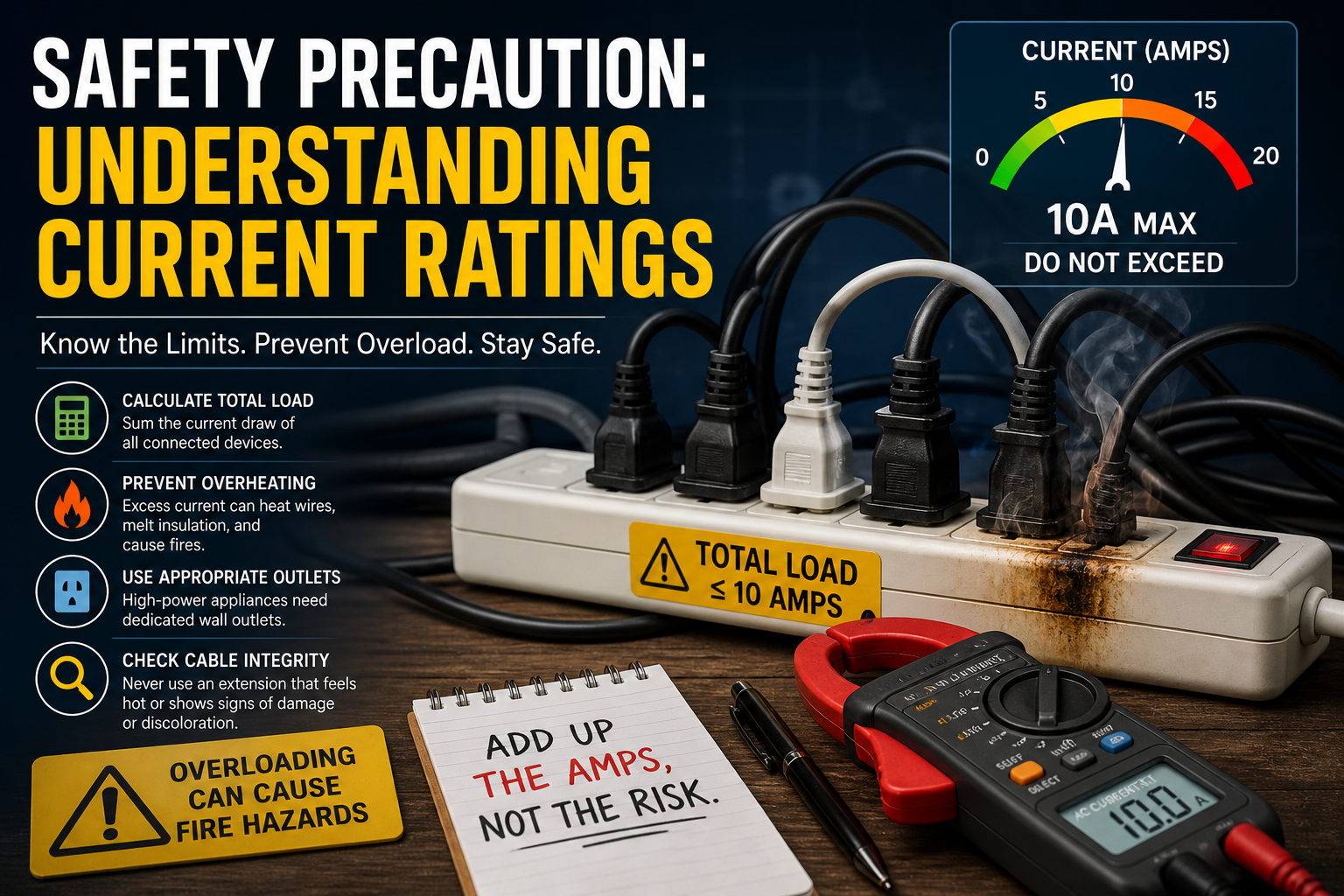
Safety Precaution: Understanding Current Ratings
When working with electrical extensions and power strips, the current rating (measured in Amperes or "Amps") is the most critical safety factor to consider. Overloading an extension occurs when the total current draw of all connected devices exceeds the rating the cable is designed to handle safely.
Key Points to Remember:
- Total Load Calculation: Always sum the current requirements of every device plugged into the extension to ensure they do not exceed the maximum rating.
- Preventing Overheating: Drawing too much current causes the internal wires to heat up significantly, which can melt the insulation and lead to electrical fires or short circuits.
- Device Suitability: High-power appliances—such as heaters, microwaves, or specialized electronics repair equipment—often require their own dedicated wall outlet rather than an extension due to their high current draw.
- Cable Integrity: Never use an extension that feels hot to the touch or shows signs of discoloration, as these are immediate indicators of a current overload.
Learning Description This module provides a technical overview of electrical safety protocols specifically focusing on Amperage (Current) limits. It is designed to help users identify the risks of "daisy-chaining" extensions and understand how to match device power requirements with appropriate hardware to prevent equipment damage and fire hazards.